
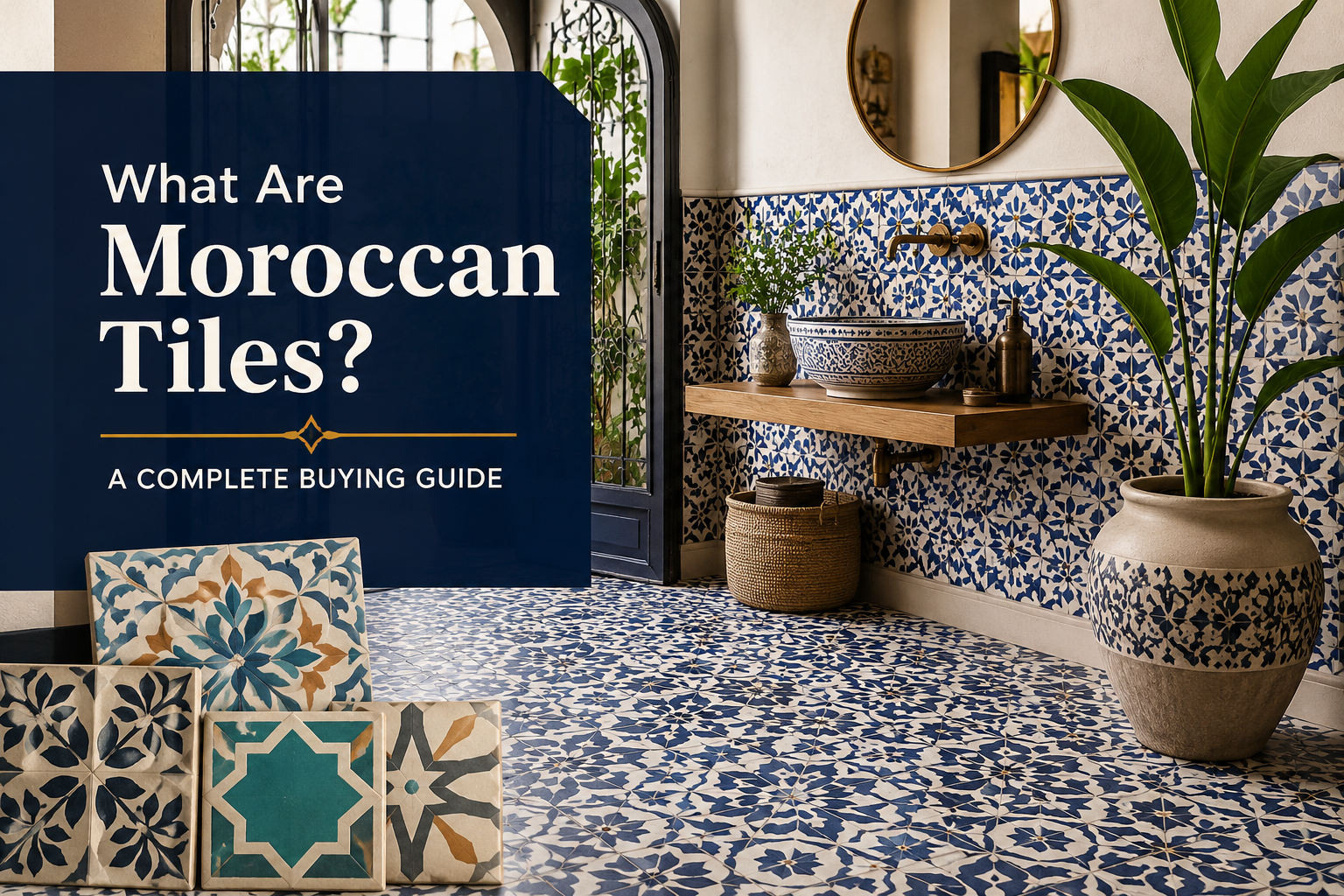
What Are Moroccan Tiles? A Complete Buying Guide
Have you ever walked into a room and immediately noticed the stunning floor or wall design? Chances are, Moroccan Tiles created that unforgettable look. These beautiful tiles combine artistic patterns, rich colours, and timeless craftsmanship. As a result, they can transform ordinary spaces into elegant interiors.
Whether you are renovating your bathroom, designing a stylish kitchen, or upgrading your living room, Moroccan Tiles offer endless design possibilities. This buying guide explains everything you need to know before making your purchase.
What Are Moroccan Tiles?
Moroccan Tiles are decorative tiles inspired by the traditional architecture and craftsmanship of Morocco. They feature bold geometric patterns, floral motifs, and vibrant colours that instantly add personality to any space.
Originally handcrafted by skilled artisans, these tiles reflected centuries of Moroccan culture and Islamic art. Today, manufacturers also produce machine-made versions that maintain the same attractive appearance while offering improved durability and affordability.
Furthermore, Moroccan-inspired designs now come in ceramic, porcelain, cement, and vitrified tile options, making them suitable for modern homes.
Why Are Moroccan Tiles So Popular?
Homeowners and interior designers love Moroccan Tiles because they combine beauty with functionality.
Some of the biggest advantages include:
- Unique and eye-catching patterns
- Timeless appeal that never goes out of style
- Suitable for both modern and traditional interiors
- Available in many colours and finishes
- Easy to pair with neutral furniture
- Durable when installed correctly
- Excellent choice for feature walls and statement floors
Consequently, these tiles remain one of the most popular decorative flooring options worldwide.
Types of Moroccan Tiles
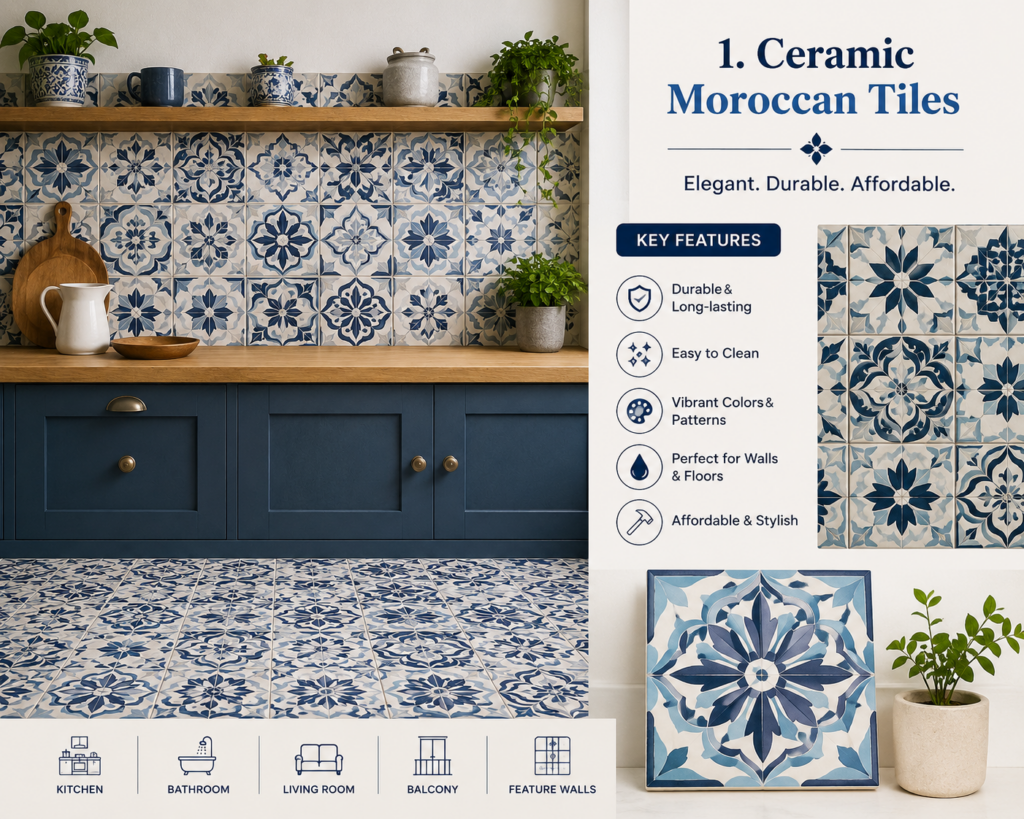
1. Ceramic Moroccan Tiles
Ceramic tiles offer excellent value for money. They work well for indoor walls and areas with light foot traffic.
Best for:
- Kitchen backsplashes
- Bathroom walls
- Decorative accent walls
tur adipiscing elit. Ut elit tellus, luctus nec ullamcorper mattis, pulvinar dapibus leo.
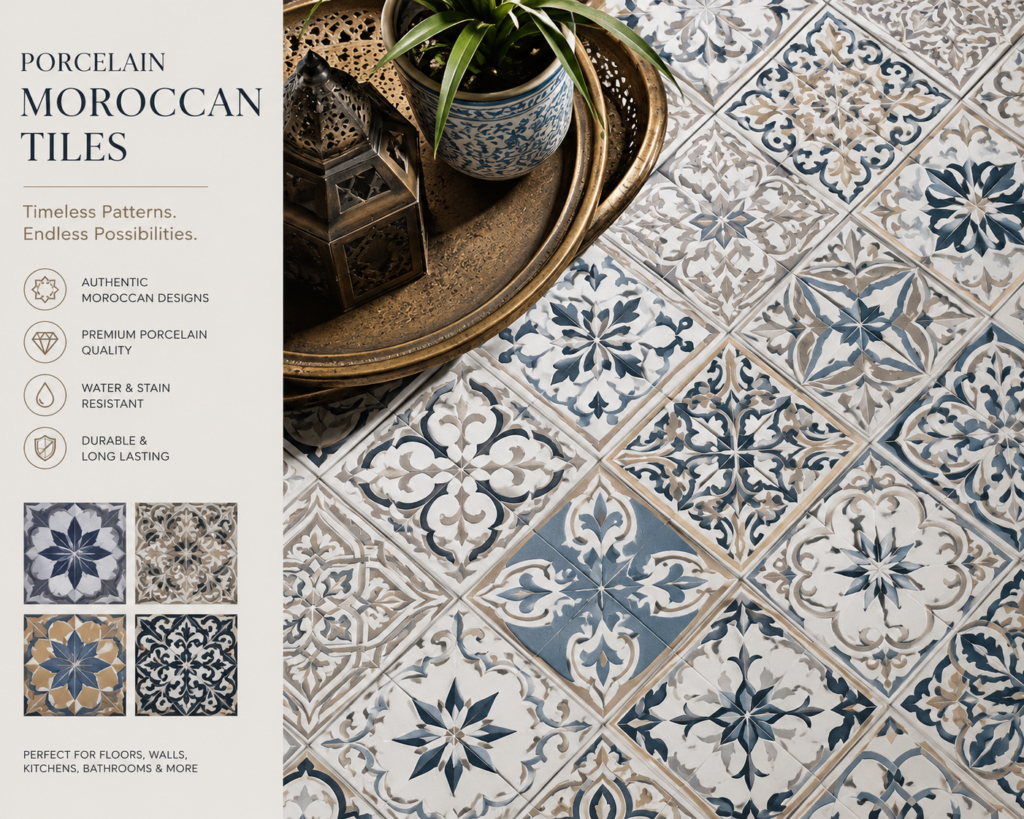
2. Porcelain Moroccan Tiles
Porcelain Moroccan Tiles are denser and stronger than ceramic tiles. Therefore, they resist water, stains, and scratches more effectively.
Best for:
- Living rooms
- High-traffic areas
- Bathrooms
- Outdoor covered spaces
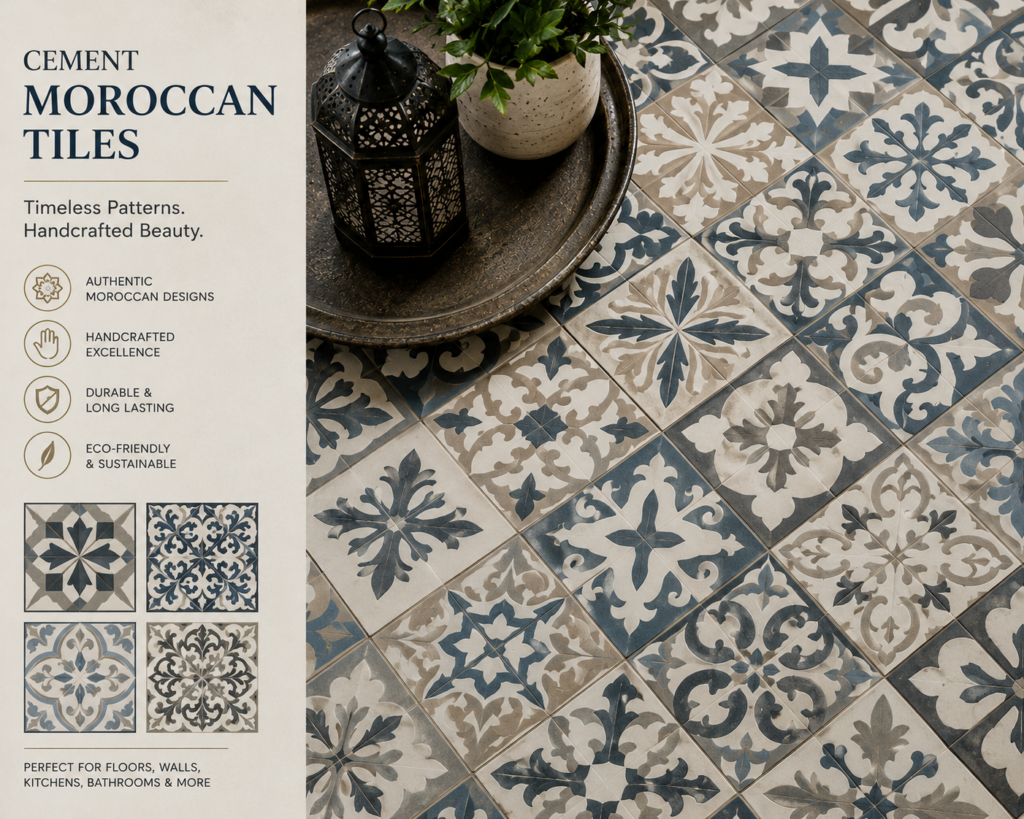
3. Cement Moroccan Tiles
Cement tiles create an authentic handcrafted appearance. However, they require sealing and regular maintenance to preserve their beauty.
Best for:
- Luxury interiors
- Boutique hotels
- Designer homes
4. Vitrified Moroccan Tiles
Vitrified tiles provide exceptional strength with minimal maintenance. In addition, they resist moisture and daily wear, making them ideal for busy households.
Best for:
- Residential flooring
- Commercial spaces
- Dining rooms

Where Can You Use Moroccan Tiles?
One of the biggest advantages of Moroccan Tiles is their versatility.
You can install them in:
- Bathrooms
- Kitchens
- Living rooms
- Dining areas
- Entryways
- Balcony floors
- Stair risers
- Feature walls
- Outdoor patios
- Café interiors
For instance, many homeowners use patterned Moroccan tiles on the floor while keeping surrounding walls plain. This approach creates a balanced and elegant design.
Popular Moroccan Tile Colours
Colour plays a major role when selecting Moroccan-inspired designs.
Popular options include:
- Blue and White
- Black and White
- Grey
- Terracotta
- Emerald Green
- Mustard Yellow
- Beige
- Multi-colour vintage patterns
Meanwhile, neutral shades suit minimalist homes, while colourful patterns create bold statement spaces.
Moroccan Tiles vs Plain Tiles
| Feature | Moroccan Tiles | Plain Tiles |
|---|---|---|
| Appearance | Decorative and artistic | Simple and minimal |
| Design | Pattern-rich | Solid colours |
| Visual Impact | High | Moderate |
| Best Use | Feature areas | Entire flooring |
| Style | Traditional and modern | Modern and contemporary |
Therefore, many designers combine both styles to achieve a sophisticated look.
Things to Consider Before Buying Moroccan Tiles
Buying the right Moroccan Tiles requires more than choosing an attractive pattern.
Consider these important factors:
Tile Material
Choose ceramic, porcelain, cement, or vitrified tiles based on where you plan to install them.
Tile Finish
Matte finishes provide better slip resistance. On the other hand, glossy finishes create a brighter appearance.
Room Size
Large patterns suit spacious rooms. Smaller rooms often look better with subtle or medium-sized patterns.
Maintenance
Some cement tiles need sealing. Conversely, porcelain and vitrified tiles require very little maintenance.
Colour Scheme
Select colours that complement your furniture, paint, and décor.
Budget
Prices vary depending on material, finish, and manufacturing process. Therefore, compare multiple options before making your decision.
Are Moroccan Tiles Easy to Maintain?
Yes. Most modern Moroccan Tiles require very little maintenance.
Follow these simple care tips:
- Sweep regularly to remove dust.
- Mop using a mild tile cleaner.
- Avoid harsh chemicals.
- Clean spills quickly.
- Use furniture pads to prevent scratches.
As a result, your tiles will remain beautiful for many years.
What Is the Price of Moroccan Tiles?
The cost depends on several factors, including:
- Material
- Brand
- Size
- Finish
- Design complexity
- Manufacturing process
Generally, ceramic options are the most affordable. Meanwhile, handcrafted cement tiles usually cost more because artisans produce them individually.
For updated pricing, visit your nearest premium tile showroom.
Final Thoughts
Moroccan Tiles bring colour, character, and timeless elegance to any home. Whether you choose ceramic, porcelain, cement, or vitrified designs, these decorative tiles create a striking visual impact. Additionally, selecting the right material and finish ensures long-lasting performance.
Before making your purchase, compare different styles, check durability, and choose colours that match your interior. With thoughtful planning, Moroccan tiles can become the standout feature of your home.
Related Reading: [Insert Internal Link to Relevant Post]
Learn More: [Insert Outbound Link to Authority Source]