
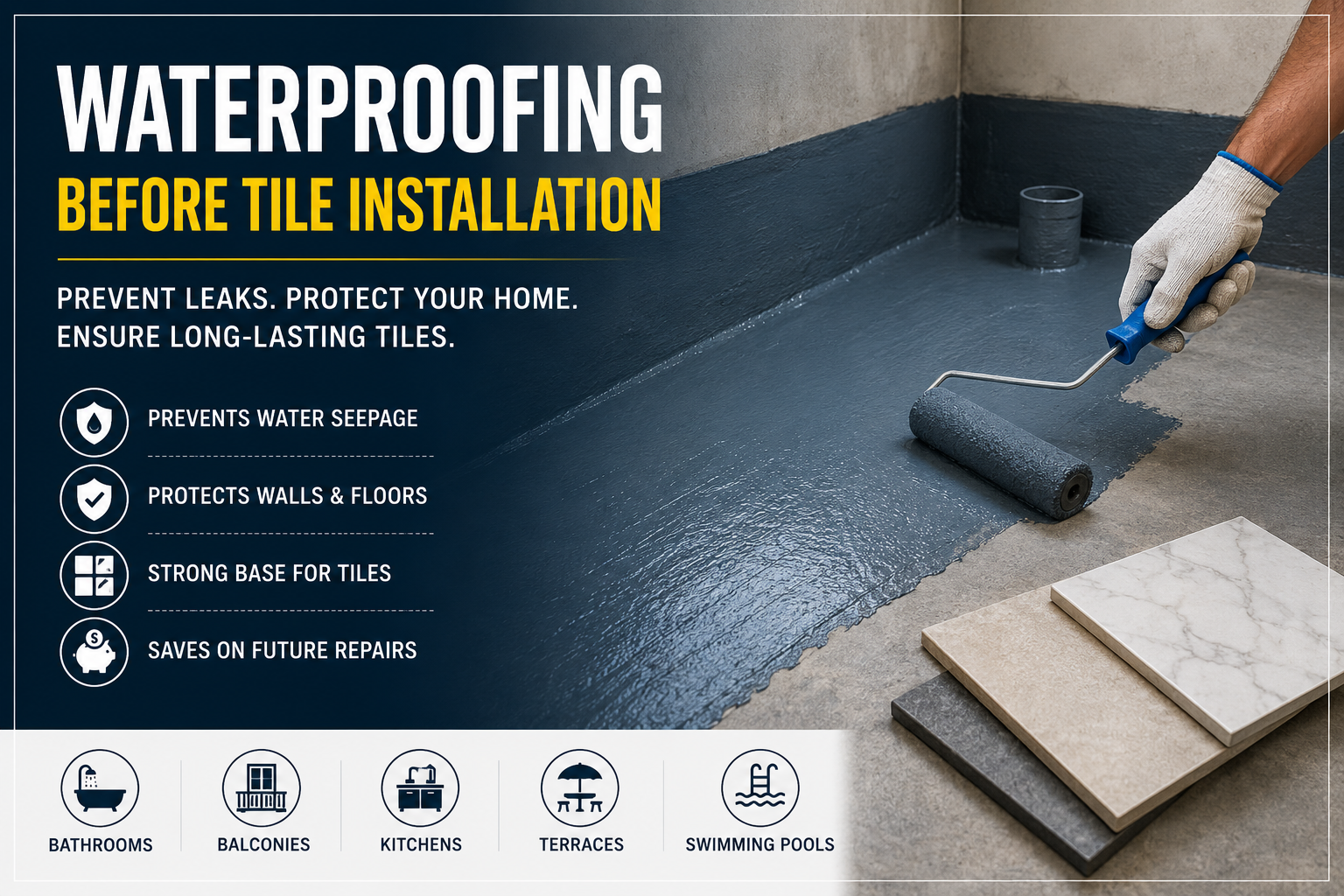
Waterproofing Before Tile Installation: The Complete Guide to Prevent Leaks & Tile Damage
Have you ever noticed bathroom tiles coming loose or damp patches appearing on walls? In many cases, the problem starts long before the tiles are installed. Waterproofing Before Tile Installation is one of the most important steps in creating a durable and moisture-resistant space. Skipping this process can lead to water seepage, mould growth, cracked tiles, and costly repairs.
Whether you’re renovating a bathroom, building a new kitchen, or upgrading a balcony, proper waterproofing protects both your tiles and your home’s structure. This guide explains everything you need to know before laying your first tile.
What Is Waterproofing Before Tile Installation?
Waterproofing Before Tile Installation is the process of applying a waterproof barrier over the surface before fixing tiles. This barrier prevents water from penetrating the substrate, protecting walls, floors, and concrete from moisture damage.
Although tiles resist water, they are not completely waterproof. Water can pass through grout lines, expansion joints, and tiny cracks over time. Therefore, a waterproof membrane creates an additional layer of protection.
Why Is Waterproofing So Important?
Many homeowners believe tiles alone stop water. However, that is only partly true.
Without proper waterproofing, moisture slowly reaches the structure underneath. Consequently, this can weaken the flooring and walls.
Here are the major benefits:
- Prevents water seepage
- Protects concrete and walls
- Reduces mould and mildew growth
- Increases tile lifespan
- Prevents loose or hollow tiles
- Minimizes future repair costs
- Improves indoor hygiene
- Enhances property value
Furthermore, waterproofing provides peace of mind for years after installation.
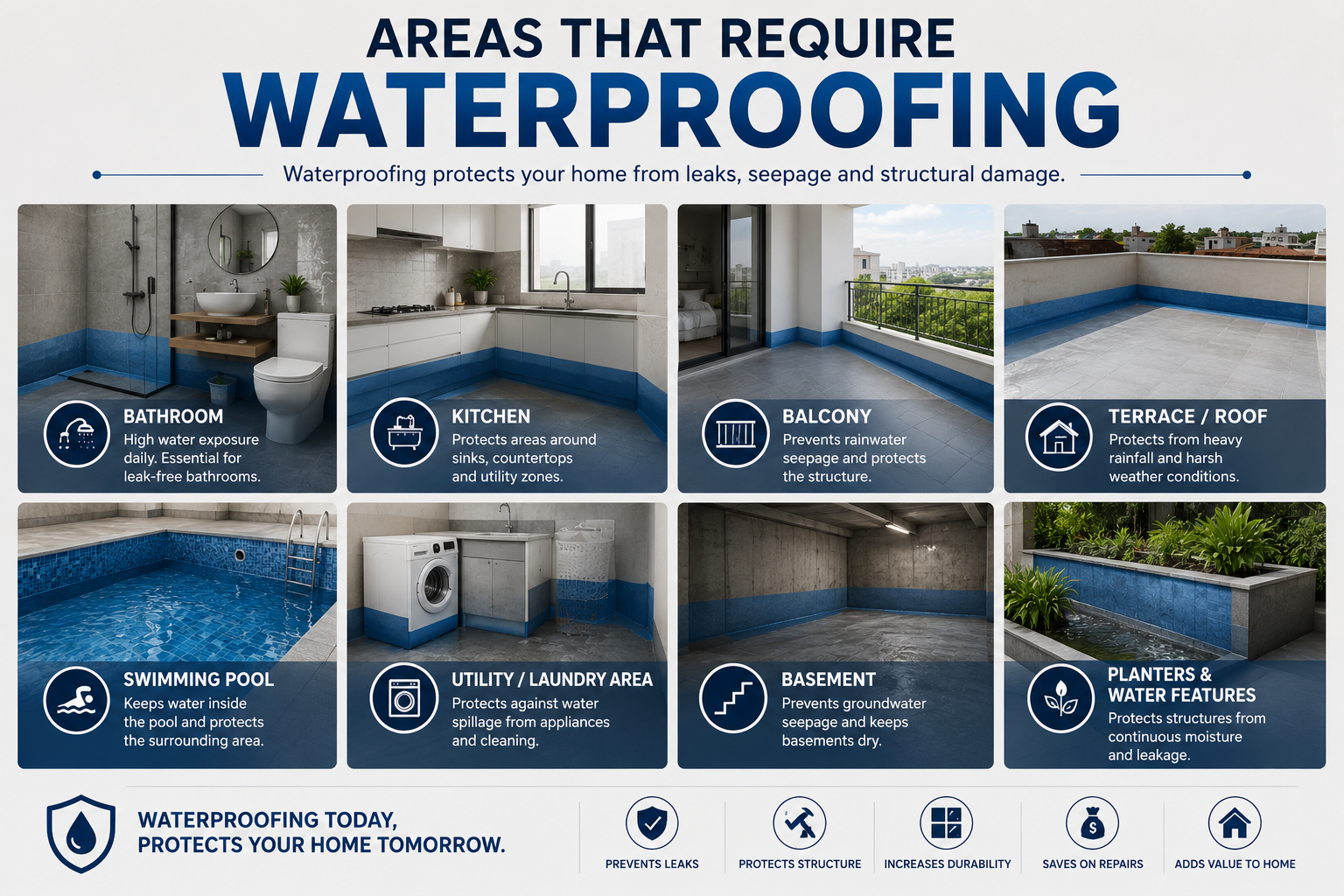
Areas That Require Waterproofing
Not every room requires complete waterproofing. However, wet and exposed areas always need proper protection.
Bathroom
Bathrooms experience daily water exposure. Therefore, waterproofing is essential for floors, shower areas, and walls.
Kitchen
Kitchen sinks and dishwashing areas frequently experience moisture. Consequently, waterproofing prevents hidden water damage.
Balcony
Rainwater constantly affects balconies. A waterproof membrane protects the concrete beneath outdoor tiles.
Terrace
Large terraces receive direct sunlight and heavy rainfall. Therefore, waterproofing prevents leakage into lower floors.
Swimming Pools
Pools require professional waterproof systems because they remain filled with water throughout the year.
Laundry Room
Washing machines and utility sinks often leak small amounts of water. Waterproofing keeps the floor protected.
How Long Does Waterproofing Last?
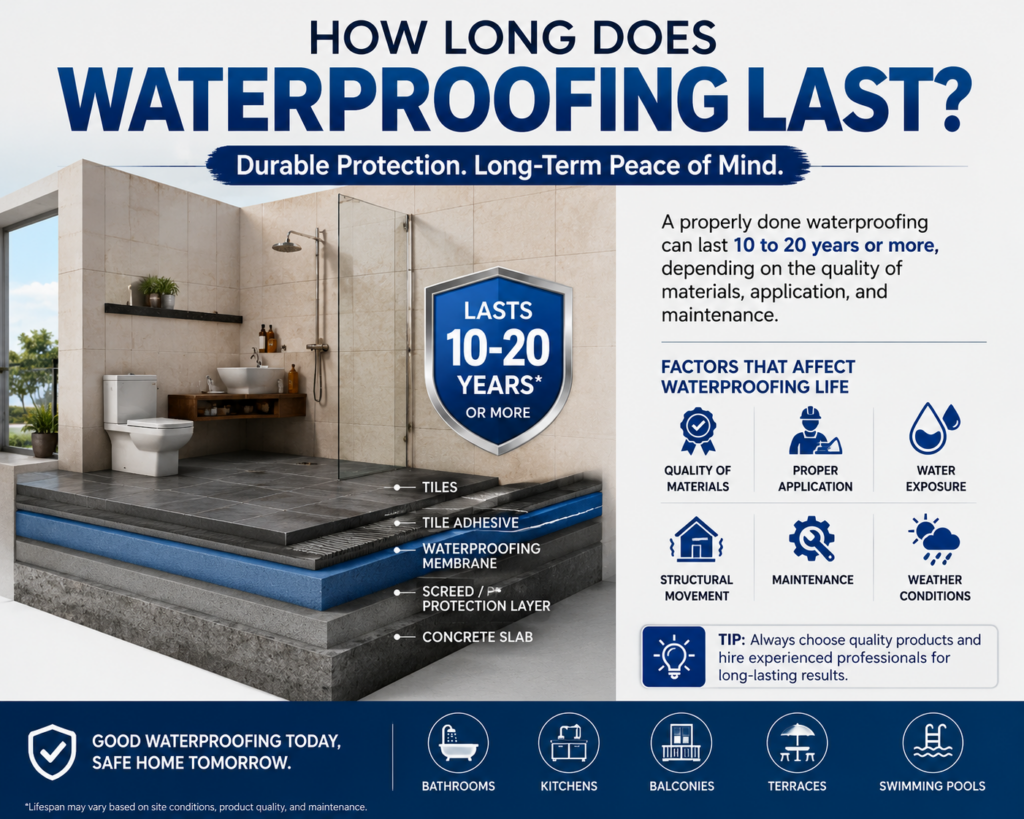
Properly installed waterproofing can last 10 to 20 years or even longer.
Its lifespan depends on:
- Material quality
- Installation method
- Water exposure
- Surface movement
- Maintenance
Therefore, investing in quality materials often saves money over time.
Signs That Waterproofing Has Failed
Watch for these warning signs:
- Damp walls
- Water stains
- Peeling paint
- Loose tiles
- Hollow tile sounds
- Mould growth
- Musty smell
- Cracked grout
If you notice these issues, inspect the waterproof layer before replacing the tiles.
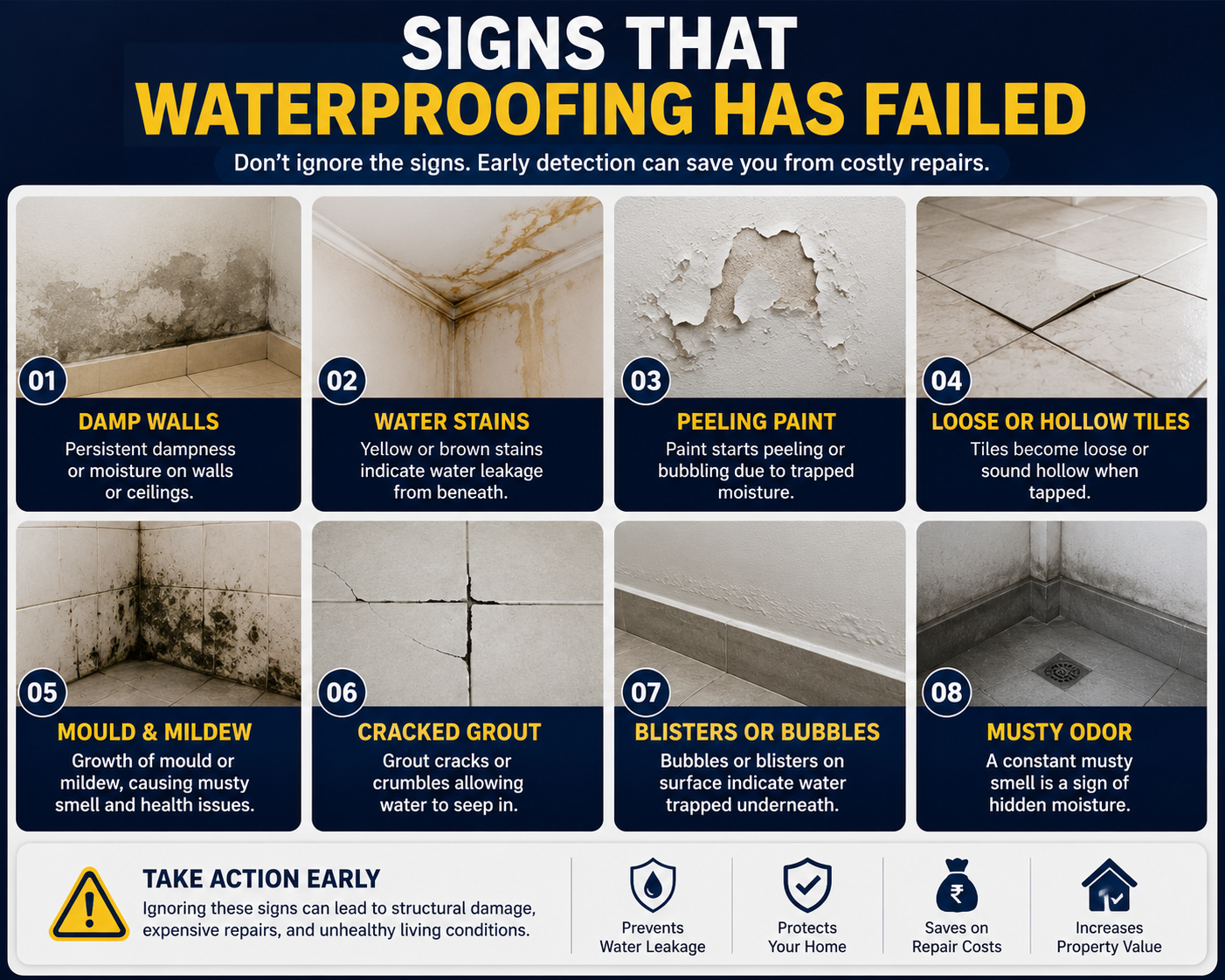
Signs That Waterproofing Has Failed
Watch for these warning signs:
- Damp walls
- Water stains
- Peeling paint
- Loose tiles
- Hollow tile sounds
- Mould growth
- Musty smell
- Cracked grout
If you notice these issues, inspect the waterproof layer before replacing the tiles.
Frequently Asked Questions
Is waterproofing necessary before tile installation?
Yes. Waterproofing protects the structure from moisture and prevents future leakage, mould, and tile damage.
Can I install tiles without waterproofing?
You can, but it increases the risk of water seepage, especially in bathrooms, balconies, kitchens, and terraces.
How long should waterproofing dry before tiling?
Drying time varies by product. Most systems require 24–48 hours before tile installation. Always follow the manufacturer’s instructions.
Does grout make tiles waterproof?
No. Grout is water-resistant but not completely waterproof. Water can still penetrate over time.
Which waterproofing method is best?
For most residential bathrooms, cementitious or liquid waterproof membranes offer excellent performance. Larger commercial projects may require polyurethane or sheet membranes.
Final Thoughts
Waterproofing Before Tile Installation is not an optional step—it is the foundation of a durable tile installation. A properly waterproofed surface prevents leaks, protects your home’s structure, and extends the life of your tiles. Moreover, it reduces maintenance costs and provides long-term peace of mind.
If you are planning a new bathroom, kitchen, balcony, or terrace project, never skip waterproofing. The right products, correct installation process, and proper curing time will ensure your tiled surfaces remain beautiful and leak-free for years.
For technical guidance on waterproofing standards and moisture protection, refer to trusted industry resources.
[READ MORE BLOGS]