
How Tiles Are Made – From Factory to Your Home
Ever wondered how those perfectly polished tiles reach your home? How Tiles Are Made – From Factory to Your Home is a fascinating journey that combines technology, design, and precision. Moreover, understanding this process helps you choose better quality tiles for your space.
In this guide, you’ll learn how raw materials transform into stylish tiles ready for installation. Let’s break it down step by step.
1.Raw Material Selection – The Foundation of Tiles
Everything begins with selecting the right raw materials. Manufacturers carefully choose:
- Clay
- Silica
- Feldspar
- Sand
These materials determine the tile’s strength and durability. Furthermore, high-quality raw materials ensure long-lasting performance.
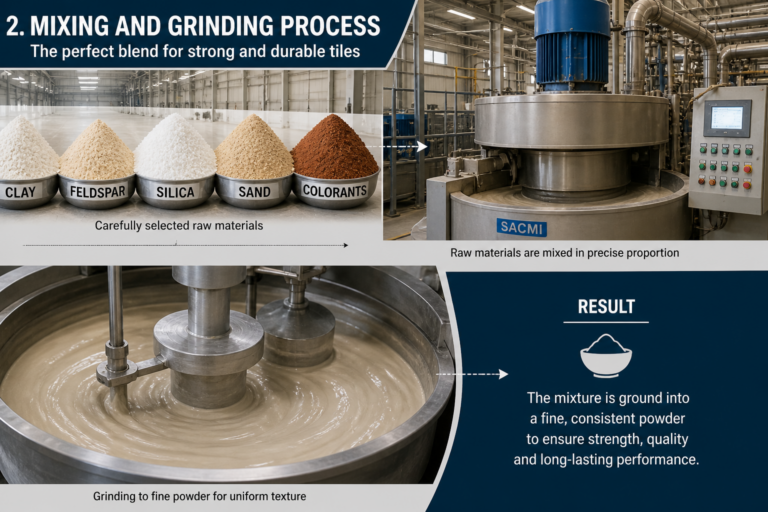
2. Mixing and Grinding Process
Next, workers mix the raw materials in specific proportions. After that, they grind the mixture into a fine powder using advanced machines.
As a result, the mixture becomes smooth and uniform. This step is crucial because consistency directly affects tile quality.
3. Shaping the Tiles
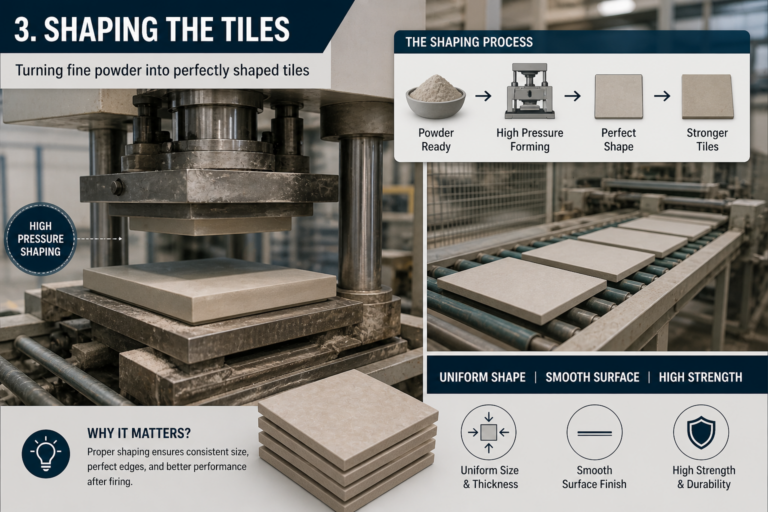
Once the mixture is ready, it moves to the shaping stage. Here, manufacturers use high-pressure machines to form tiles.
There are two common methods:
- Dry pressing
- Extrusion
In most cases, dry pressing is used for modern tiles. Consequently, the tiles get a uniform size and shape.
4. Drying and Firing in Kilns
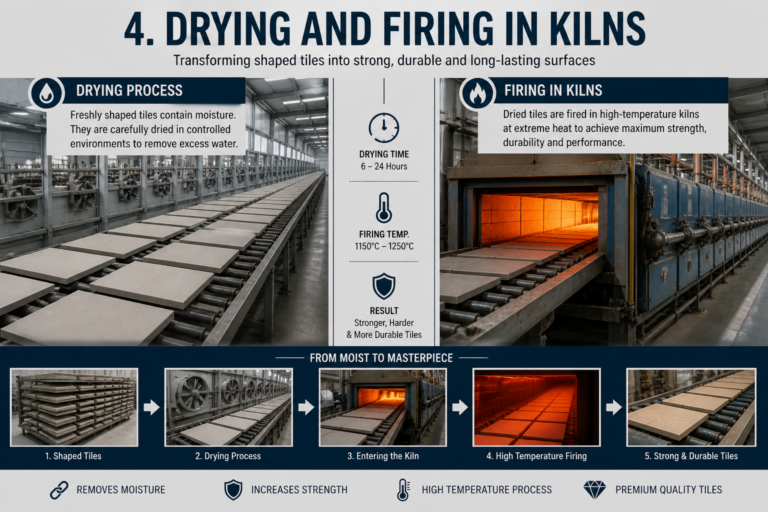
After shaping, tiles contain moisture. Therefore, they must be dried before firing.
Then, tiles are heated in kilns at extremely high temperatures (over 1000°C). This process strengthens the tiles and makes them durable.
Additionally, firing enhances hardness and water resistance.
lit. Ut elit tellus, luctus nec ullamcorper mattis, pulvinar dapibus leo.
5. Glazing and Design Printing
Now comes the most exciting part—designing.
Manufacturers apply glaze to the tile surface. Afterward, digital printing technology adds patterns such as:
- Marble finish
- Wooden texture
- Stone look
As a result, tiles achieve a premium and realistic appearance.
6. Polishing and Finishing
Once the design is applied, tiles go through polishing. This step improves:
- Shine
- Smoothness
- Overall finish
However, not all tiles are polished. Matte tiles, for instance, skip this process to maintain grip.
7. Quality Check and Testing
Before reaching the market, tiles undergo strict quality checks. Experts test:
- Strength
- Water absorption
- Scratch resistance
Therefore, only high-quality tiles pass inspection. This ensures customer satisfaction and durability.
👉 [Insert Internal Link to Relevant Post]
adipiscing elit. Ut elit tellus, luctus nec ullamcorper mattis, pulvinar dapibus leo.
8. Packaging and Distribution
Finally, manufacturers pack tiles securely to avoid damage. After that, they ship them to:
- Showrooms
- Dealers
- Retail stores
From there, tiles reach your home, ready to transform your space.
Why Understanding How Tiles Are Made Matters
Knowing How Tiles Are Made – From Factory to Your Home helps you make smarter buying decisions.
Here’s why it matters:
- You can identify high-quality tiles
- You understand pricing differences
- You choose the right type for each room
In addition, it builds trust when buying from a reliable showroom.
Pro Tips Before Buying Tiles
Before finalizing your tiles, keep these tips in mind:
- Always check tile finish and thickness
- Compare multiple designs
- Ask about durability and warranty
- Visit a showroom for real inspection
- Check more news
Final Thoughts
The journey of tiles from raw materials to your home involves multiple precise steps. Each stage plays a key role in ensuring quality and durability.
So next time you choose tiles, you’ll know exactly what goes behind their making.