
Tile Adhesive vs Cement – Which Is Better for Tile Installation?
Introduction
Choosing between tile adhesive vs cement can make or break your tile installation. Many homeowners still rely on traditional cement. However, modern construction increasingly prefers tile adhesive.
So, which option truly delivers better results? Let’s explore the differences in a simple and practical way.
What is Cement in Tile Installation?
Cement has been used for decades to fix tiles. Typically, workers mix cement with sand and water to create mortar.
✔ Advantages of Cement:
- Low upfront cost
- Easily available in the market
- Suitable for basic installations
❌ Disadvantages of Cement:
- Requires skilled labor
- Uneven application is common
- Higher chances of cracks over time
- More material wastage
Furthermore, improper mixing can weaken the bond. As a result, tiles may loosen after a few years.
What is Tile Adhesive?
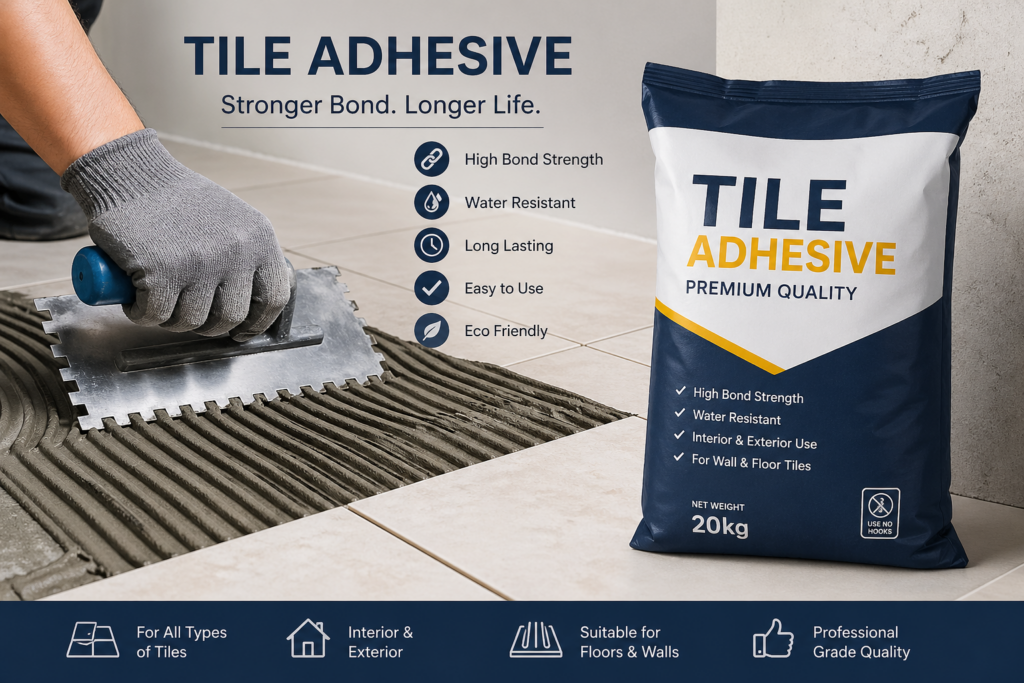
Tile adhesive is a ready-made bonding material. Manufacturers design it specifically for tile fixing.
✔ Advantages of Tile Adhesive:
- Easy and quick application
- Strong bonding strength
- Minimal wastage
- Smooth and even finish
❌ Disadvantages of Tile Adhesive:
- Slightly higher initial cost
- Requires surface preparation
In addition, tile adhesive works well with modern tiles like vitrified and large-format tiles.
Tile Adhesive vs Cement – Key Differences
1. Application Process
Tile adhesive is easy to apply. On the other hand, cement needs proper mixing and expertise. Consequently, adhesive saves time.
2. Bond Strength
Adhesive provides stronger bonding. Cement, however, may weaken if not mixed correctly.
3. Finish Quality
Adhesive ensures a smooth finish. In contrast, cement often leads to uneven surfaces.
4. Material Wastage
Tile adhesive reduces wastage significantly. Cement, however, results in more leftover material.
5. Durability
Adhesive lasts longer due to better grip. Therefore, it reduces maintenance costs.
For more technical details, you can refer to industry standards here:
👉 [Insert Outbound Link to Authority Source]
When Should You Use Tile Adhesive?
Choose tile adhesive in the following situations:
- Large-format tiles installation
- Wall tiles and vertical surfaces
- Renovation over existing tiles
- Faster project completion
Moreover, adhesive works best in modern homes where precision matters.
When Should You Use Cement?
Cement may still be useful in some cases:
- Small tiles installation
- Outdoor or rough surfaces
- Very tight budget projects
However, you should ensure skilled labor for proper results.

Cost Comparison: Adhesive vs Cement
At first glance, cement seems cheaper. However, that is not the full picture.
- Cement involves higher labor cost
- Wastage increases total expense
- Repairs may be needed sooner
In contrast, adhesive reduces long-term costs. Therefore, it often becomes the smarter investment.
Related Reading
Pro Tips for Better Tile Installation
- Always prepare the surface properly
- Use the right adhesive type for your tiles
- Avoid thick cement layers
- Hire experienced professionals
Additionally, follow manufacturer guidelines for the best results.
Final Verdict: Tile Adhesive vs Cement
Tile adhesive clearly stands out in most situations. It offers better strength, faster installation, and a cleaner finish.
However, cement still works for basic and budget projects. Ultimately, your choice depends on your needs, budget, and tile type.