
The History of Tiles – From Ancient Art to Modern Design Introduction
Introduction
The history of tiles is more fascinating than most people realize. From ancient palaces to modern homes, tiles have shaped architecture and design for thousands of years. Moreover, they have evolved in style, material, and function over time. Today, tiles are not just practical surfaces; they are a key element of interior aesthetics.
1. History of Tiles in Ancient Civilizations
The story of tiles begins around 4000 BC in Mesopotamia. Early craftsmen created tiles using clay and dried them under the sun. As a result, these tiles became one of the first decorative building materials.
For instance
- Egyptians used glazed tiles in temples and tombs
- Persians created colorful geometric patterns
- Mesopotamians used tiles to decorate walls
Furthermore, these tiles symbolized wealth and artistic expression. Because of their handmade nature, they were rare and valuable.
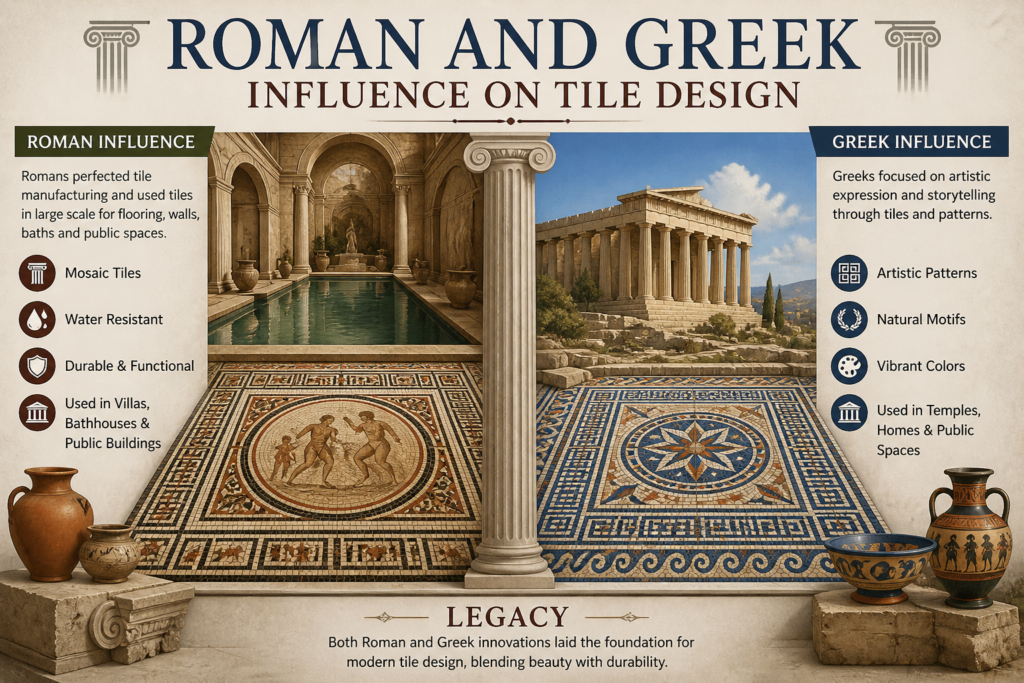
2. Roman and Greek Influence on Tile Design
The Romans transformed tile usage significantly. Instead of using tiles only for decoration, they made them more functional. Consequently, tiles became common in homes, bathhouses, and public buildings.
Key innovations included:
- Mosaic tiles for artistic flooring
- Water-resistant tiles for baths
- Durable materials for long-lasting structures
Meanwhile, Greek tiles focused more on visual storytelling. However, Roman tiles emphasized durability and engineering.
📚 Reference: [Insert Outbound Link to Authority Source]
3. Islamic and Medieval Tile Art
During the medieval period, tile design reached a new artistic level. Islamic architecture, in particular, played a major role. In addition, craftsmen introduced intricate patterns and calligraphy.
Common features included:
- Geometric and floral designs
- Bright colors like blue and turquoise
- Advanced glazing techniques
As a result, tiles became both decorative and functional. Many historical mosques still showcase these beautiful designs today.
4. Renaissance Era – Tiles as Luxury
The Renaissance period marked a turning point in the history of tiles. European countries began using tiles as a symbol of luxury and status. Consequently, demand for decorative tiles increased.
Countries that led this movement:
- Spain
- Italy
- Portugal
Moreover, artisans started hand-painting tiles with detailed artwork. Therefore, tiles became a central element in interior design rather than just a building material.
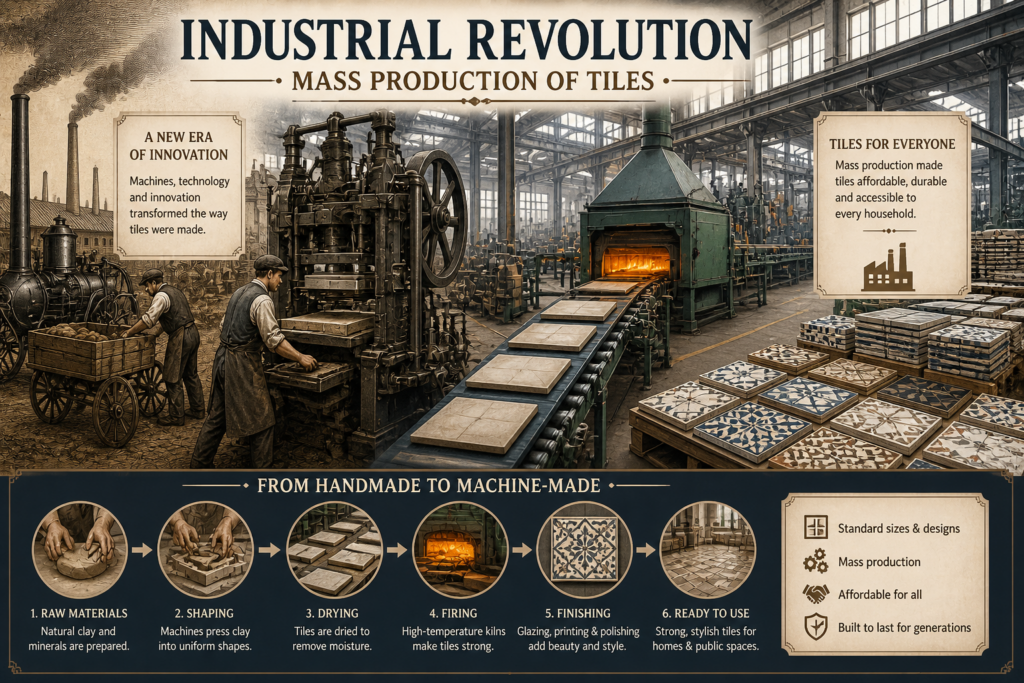
5. Industrial Revolution (Modern Tile Production)
The Industrial Revolution changed everything. Machines replaced handmade processes, which made tiles more affordable. As a result, tiles became accessible to the general public.
Major advancements included:
- Mass production techniques
- Standard sizes and shapes
- Introduction of ceramic and porcelain tiles
Because of these changes, tiles moved from luxury items to everyday essentials.
6. Modern Tiles – Style Meets Technology
Today, tiles combine innovation with design. Thanks to technology, manufacturers produce tiles in endless styles and finishes. In addition, modern tiles offer better durability and performance.
Popular modern tile types:
- Vitrified tiles for strength
- Digital printed tiles for realistic designs
- Anti-slip tiles for safety
Furthermore, tiles now mimic materials like wood, marble, and stone. As a result, homeowners can achieve premium looks at affordable prices.
Why Tiles Remain Popular Today
Key advantages:
- Easy to clean and maintain
- Highly durable and long-lasting
- Available in countless designs
- Suitable for indoor and outdoor use
Therefore, tiles remain one of the best choices for both homes and commercial spaces.
Final Thoughts
The history of tiles shows a clear journey from handcrafted art to modern innovation. Initially, tiles served decorative purposes. However, they evolved into essential design elements. Today, they offer the perfect balance of beauty and functionality.
If you are planning to upgrade your space, understanding tile history can help you make better design choices.