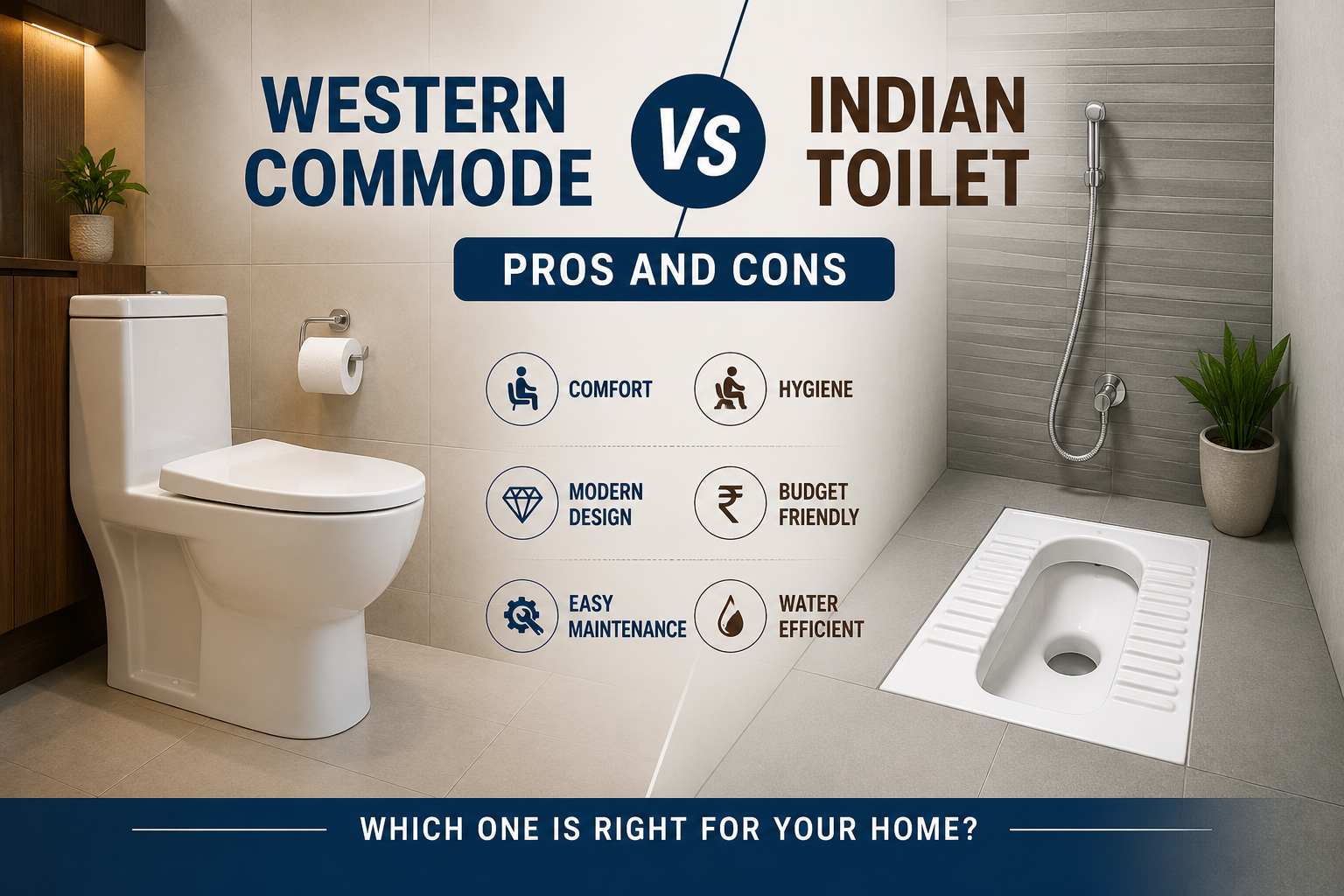
Western Commode vs Indian Toilet: Pros and Cons
Choosing between a Western commode and an Indian toilet depends on comfort, space, age, and personal preference. Here’s a detailed comparison to help you decide.
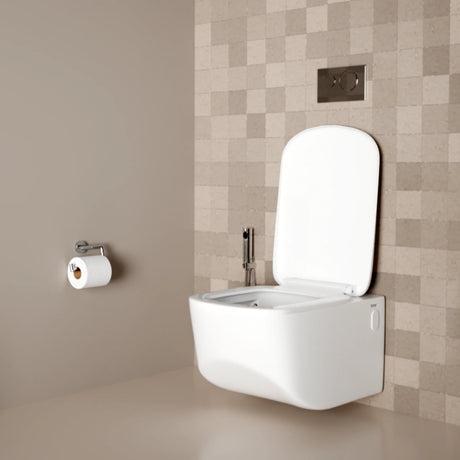
What is a Western Commode?
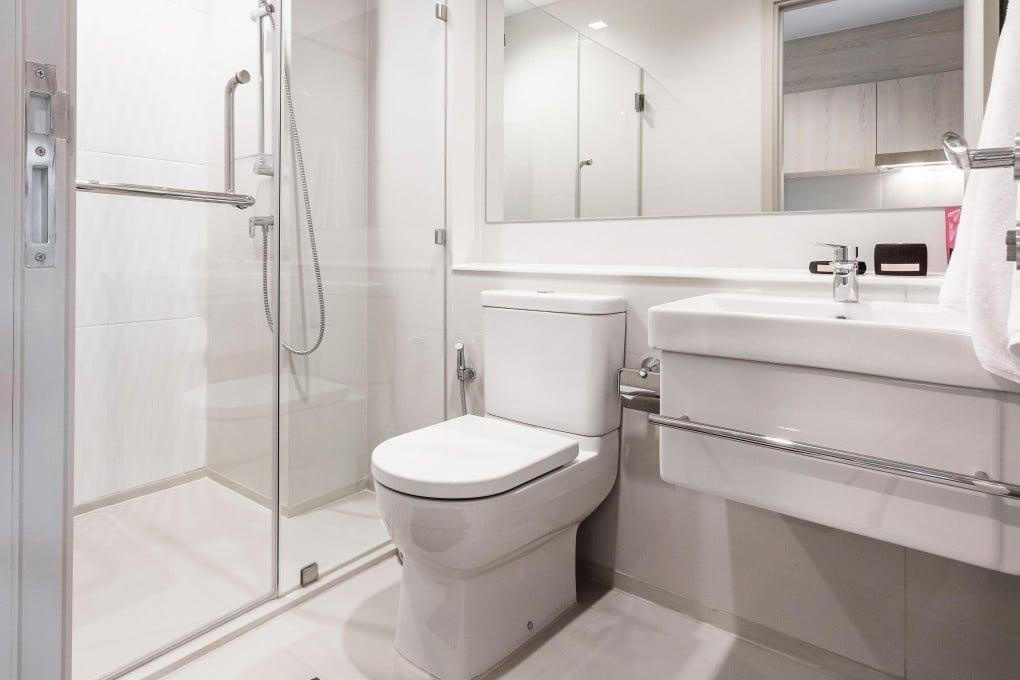
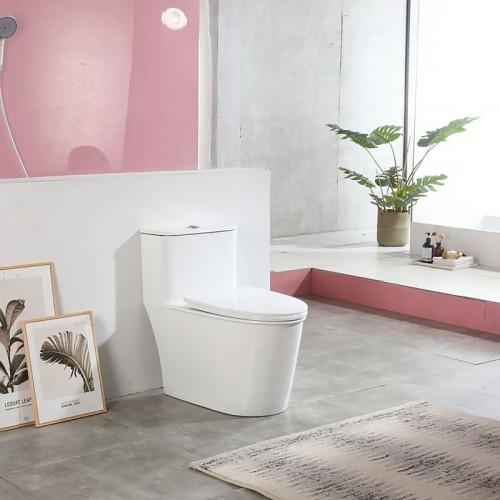
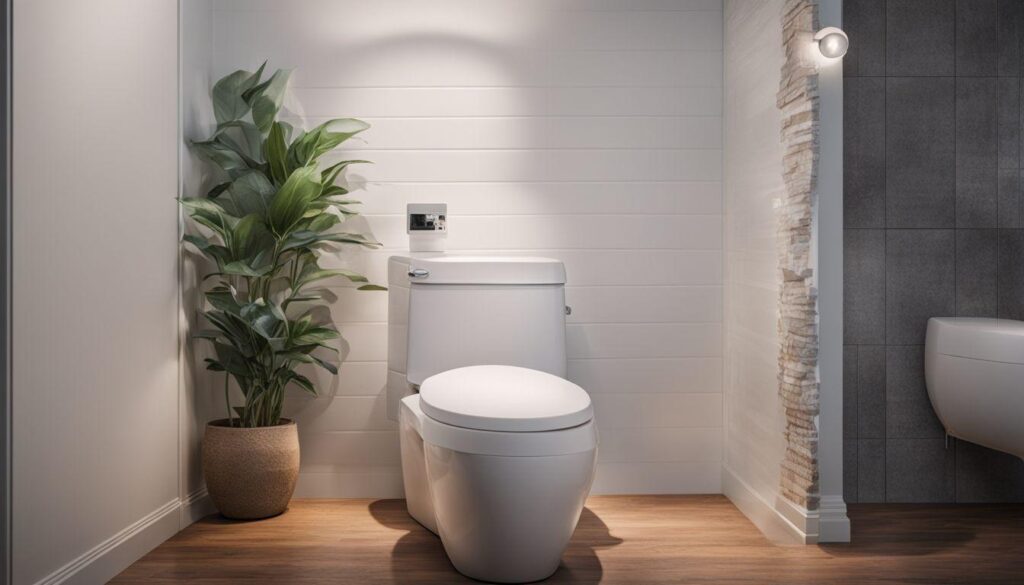
A Western commode is a sitting-style toilet commonly used in modern homes, hotels, and commercial spaces.
Pros of Western Commodes
✔ More comfortable for elderly people and those with knee or back problems
✔ Modern and stylish appearance
✔ Easier to use for long durations
✔ Compatible with smart toilet features and bidets
✔ Ideal for luxury bathrooms
Cons of Western Commodes
✖ Generally more expensive than Indian toilets
✖ Requires sitting contact with the seat
✖ Occupies slightly more bathroom space
✖ May require more maintenance
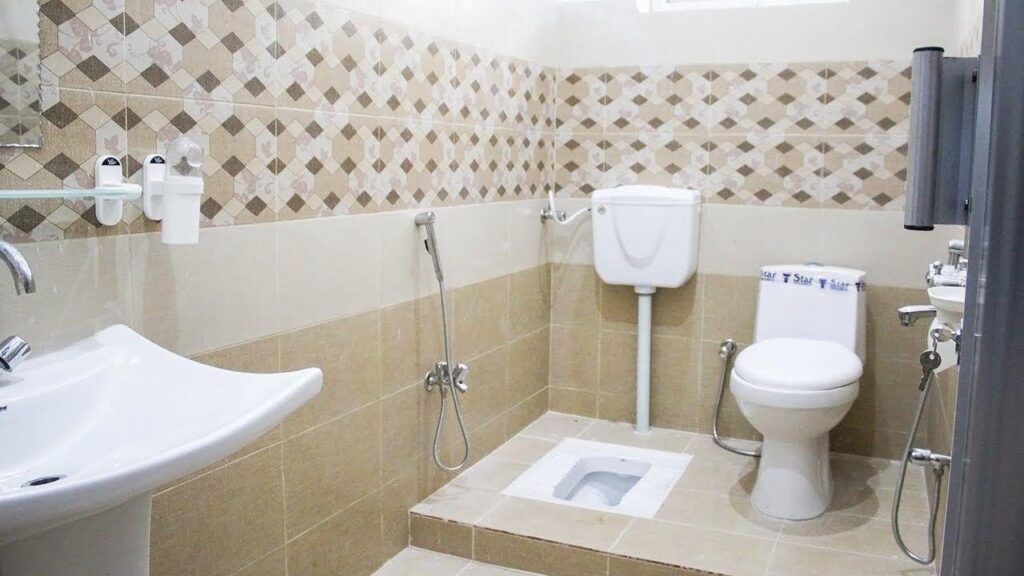
What is an Indian Toilet?
An Indian toilet is a squat-style toilet traditionally used across India and many Asian countries.
Pros of Indian Toilets
✔ More affordable installation cost
✔ Takes up less space
✔ No direct contact with the toilet seat
✔ Squatting position may support easier bowel movement
✔ Lower maintenance requirements
Cons of Indian Toilets
✖ Difficult for elderly people and those with joint issues
✖ Less comfortable for prolonged use
✖ Not preferred in many modern luxury homes
✖ Can be challenging for young children and pregnant women
Which One Should You Choose in 2026?
- Choose a Western Commode if you want comfort, modern aesthetics, and accessibility.
- Choose an Indian Toilet if you prefer a budget-friendly option and have no mobility concerns.
- For family homes, many homeowners now install one Western and one Indian toilet to accommodate different preferences.
Conclusion
Both options have their advantages. Western commodes offer superior comfort and a modern look, while Indian toilets are cost-effective, space-efficient, and hygienic for users who prefer squatting. The best choice depends on your family’s needs, bathroom size, and budget.